About me
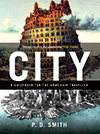
I’m the author of four books. City was published in spring 2012 and is a guidebook to our urban age, taking the reader on a journey through the past, present and future of the world’s cities.

My previous book, Doomsday Men, was a cultural history of science, superweapons and other strangeloves, published by Penguin in the UK, St Martin’s Press in the US and by Companhia das Letras in Brazil. I’ve also written a brief biography of Einstein and a somewhat longer study of science in German literature called Metaphor and Materiality. I’m currently writing my next book which is called Watching the Detectives. I write fiction too, although as yet none of this has been published.
So why is my website called ‘Kafka’s mouse’?
There’s a wonderful story by Kafka called “Josephine the Singer, or the Mouse Folk” that’s haunted me ever since I first read it as a student. I’ve written a short piece about what it means to me for the Independent and a longer article for the website 3 Quarks Daily.
When Josephine sings, her fellow mice are transfixed by the sounds she makes without knowing why. Although those listening feel her voice is unexceptional, there is an undeniable quality to her performances that commands attention and moves them deeply. They listen in complete silence. Sometimes it is difficult to tell whether it is the singing or the stillness that surrounds her voice that is so compelling.
“Something of our poor brief childhood is in it, something of lost happiness that can never be found again, but also something of active daily life, of its small gaieties, unaccountable and yet springing up and not to be obliterated.”
And then one day Josephine is gone. She had warned them that she might leave, but no one believed her. The narrator claims that it makes little difference to him and his fellow mice: she will soon be forgotten. But his words ring hollow. His moving description of her singing, written after Josephine’s disappearance, shows just how much she means to them. Now that the singer has left, there is a gaping hole in their lives.
 I have never been able to pin down quite what it is about this story that is so memorable. At times, Josephine has seemed to me to be an artist or a poet, giving voice to what people around her feel but are unable to put into words.
But at other times – particularly when I was researching my biography of Einstein – she is like a great scientist, someone who can read the invisible language of the universe, glimpsing the mind of god while the rest of us struggle to follow her most basic thoughts. After all, as Richard Dawkins has said, science can allow us to “hear the galaxies sing”.
Like Josephine’s singing, the story’s meaning remains elusive, just out of reach. But whether you see Kafka’s Josephine as representing writers or scientists, I can’t help feeling that her singing is what life is ultimately all about: the quest to understand ourselves and our place in the universe.
(If you want to read more about Kafka, I strongly recommend Reiner Stach’s brilliant biography. I’ve reviewed the first two volumes here and here.)
Science & literature
Scientists, writers, artists – they each use specialised techniques and vocabularies, and they see the world through their own unique lenses. But in the end what unites them is more important than what divides them: this quest for understanding. People talk about ‘two cultures’, with science on one side of the divide and literature on the other.
But in my writing I have tried to show how these so-called two cultures are closer than most people think.
In Doomsday Men I tell the true story of the Doomsday Bomb, an ultimate weapon that terrified people in the cold war. My book reveals how the history of weapons of mass destruction is not just one of soldiers and scientists, but also about journalists and pulp fiction writers using their talents to inspire people with tales about saviour scientists and the dream of the superweapon. Later, in the atomic age, that dream became a nightmare and people began viewing scientists not as saviours, but as Dr Strangeloves.

So as well as being a work of narrative history, my book shows how ideas flow back and forth between popular culture and science. My article “Faust, the Physicists and the Atomic Bomb”, published in 2008, explores themes discussed in my book Doomsday Men, in particular the cross-fertilization between science and literature in the 1930s, at key moments in atomic physics and in the development of the atomic bomb. You can download a PDF of this here.
I’m fascinated by the way the ideas of science permeate our lives and underpin our beliefs. My earlier study, Metaphor and Materiality, showed how in German literature, writers from Goethe through to Robert Musil and Bertolt Brecht explored scientific ideas in their work. Both books demonstrate that, far from being two divided cultures, science and literature are part of the same equation.
I write regular reviews. You can find my work in the Guardian Review where I do a bi-weekly round-up of the latest non-fiction paperbacks, as well as in the Independent, Icon magazine and the Times Literary Supplement.
I’m represented by Peter Tallack at the Curious Minds literary agency.
Background

I started working with images rather than language – as a photographer. After a couple of years at art school, I became an editorial photographer, supplying landscape pictures to newspapers and magazines such as The Daily Telegraph and Homes and Gardens.
For me the highpoint of this all too brief career as a photographer was being able to work with my father on the book Writers in Sussex. We spent months tramping up and down the highways and byways of Sussex, one of England’s most beautiful counties, photographing the houses once lived in by writers like HG Wells, Virginia Woolf and Ezra Pound.
Playwright (and Sussex author) Christopher Fry was kind enough to write a personal foreword to our book. I’m gradually putting these photographs, as well as other more recent images, on Flickr. In 1988 I returned to education as a mature student, after taking two A‑levels in under a year (that’s a lot of cramming when you’re working full-time!). I studied for a degree in German at the University of Kent at Canterbury which included a wonderful year at Munich University. After this I completed a doctorate on science and literature in the German department at University College London.
Following a brief but fascinating interlude working for Liz Calder as her assistant at Bloomsbury Publishing, I was awarded a British Academy Postdoctoral Fellowship. This prestigious award allowed me to continue my academic research on science in culture for a further three years, while teaching in the German department at UCL.
During 2003 and 2004 I taught a course on science and literature in the Department of Science and Technology Studies at UCL. The STS department at UCL subsequently made me an Honorary Research Associate.
Articles & reviews by me on science & literature
Brief review of Science on Stage: From “Doctor Faustus” to “Copenhagen”, by Kirsten Shepherd-Barr, Guardian, 20 October 2012
Brief review of ThermoPoetics by Barri J Gold, Guardian, 24 March 2012
Clare Dudman interviewed me in 2009 for her literary blog, Keeper of the Snails.
“The extraordinary ability of science to transform people’s view of the world”, Why is science important?, February 2009
“Faust, the Physicists and the Atomic Bomb”, Publications of the English Goethe Society, vol 77, no 2 (2008), 101–12
“Elective Affinity: A Tale of Two Cultures?”, Prometheus, 04 (2000), 46–65
“Science and the City: Alfred Döblin’s Berlin Alexanderplatz”, London Magazine, April/May 2000, 27–36
“Scientific Themes in Goethe’s Faust” In: Paul Bishop (ed), A Companion to Goethe’s Faust (Columbia: Camden House, 2001)
“The Scientist as Spectator: Musil’s Törleß & the Challenge to Mach’s Neo-Positivism”, The Germanic Review 75 (2000): 37–51
“German Literature and the Scientific World-View in the Nineteenth and Twentieth Centuries”, Journal of European Studies 27 (1997): 389–415
“Who cares when the rockets come down?”, review of Mad, Bad and Dangerous? The Scientist and the Cinema, by Christopher Frayling, Guardian, 25 February 2006
“In the ditch”, review of Literature and Science, 1660–1834, ed by Judith Hawley, Times Literary Supplement, 6 August 2004
“Cultural history”, review of Science, reading, and renaissance literature: The art of making knowledge, by Elizabeth Spiller, Times Literary Supplement, 3 September 2004
The One Culture? A conversation about science, ed by Jay A. Labinger and Harry Collins, review in the Times Literary Supplement, 26 July 2002
“The wingbeat of the unknown”, review of Grammars of Creation, by George Steiner, Times Literary Supplement, 6 April 2001