16 February 2009 | Brecht, Science, Science & literature
Alom Shaha has set up an excellent website that seeks to answer the question: Why is science important?
There are many interesting replies here from the likes of Jim Al-Khalili, Simon Singh, and Marcus Chown. He’s kindly asked me to add my own answer — you can read it here.
My own favourite is by Maya Hawes. She’s twelve years old.
02 February 2009 | Writing & Poetry

Winter has arrived in Hampshire.
I haven’t seen this much snow since I lived in Munich…
28 January 2009 | cities, New York, TLS
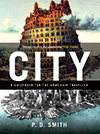
The Times Literary Supplement has just published my review of three immensely impressive studies of urban history: Gail Fenske’s The Skyscraper and the City: The Woolworth Building and the Making of Modern New York (Chicago), Robert H. Kargon & Arthur P. Molella’s Invented Edens: Techno-Cities of the Twentieth Century (MIT), and Dell Upton’s Another City: Urban Life and Urban Spaces in the New American Republic (Yale).
This is the first paragraph:
 “At 7.30 on the evening of April 24, 1913, President Woodrow Wilson pushed a button on his desk in Washington, DC, sending a telegraphic signal to New York where it set off an alarm bell in the engine room of a skyscraper and set in motion four mighty Corliss-type engines and dynamos. In an instant, some 80,000 incandescent bulbs flashed on, illuminating for the first time the world’s tallest skyscraper – the Woolworth Building. Thousands of spectators had gathered in City Hall Park and along lower Broadway to witness the dazzling electrical spectacle that marked the opening of this fifty-five-storey addition to New York’s skyline. On the New Jersey shore, people caught their breath as the tower appeared, shimmering against the night sky, a gleaming beacon of modernity visible from ships a hundred miles away. As the 792-foot tall skyscraper was bathed in electric light, the news was being transmitted from its pinnacle by Marconi wireless to a receiver on the Eiffel Tower. From there it was beamed around the world. This modern media event was, as one commentator said, ‘the premier publicity stunt of this or any other day’. It was a fitting opening for what would become the most famous office building in the world.”
Read the rest here.
22 January 2009 | Doomsday Men, Dr Strangelove, mad scientist, Science & literature, Wells |
The leading historian of science fiction Professor David Seed, author of American Science Fiction and the Cold War (1999) among other titles, has written a nice review of Doomsday Men for the Modern Language Review. Here’s the first paragraph:
“Taking Dr. Strangelove as his main reference-point, Peter D. Smith sets out to give us a narrative of the history of the superweapon, whose origin he dates more or less to the discovery of radioactivity. One of the main strengths of this account lies in Smith’s ability to combine science, history, and fiction in an engrossing cultural history of one of the concepts lying at the heart of the Cold War. It may sound odd, but the superweapon was conceived in a utopian spirit as the device which would end war once and for all. This idea was from the very beginning politically naïve and internally flawed. Smith rightly presents H. G. Wells’s 1914 novel The World Set Free as a formative text in imagining how the world could be reborn through atomic war. Here Wells was technologically prescient, but also disturbingly unconcerned about the millions who would have to be atomized to realize this dream. It was a dream made possible by an enterprising scientist, and Smith charts out fascinatingly how the figure of the scientist fluctuated in the period from the turn of the twentieth century up to the 1960s between the polarized extremes of a role as saviour of humanity or its villainous destroyer.”
(David Seed, Modern Language Review 104.1 (Jan 2009), 195–6)
16 January 2009 | nuclear weapons, Trident |
Today’s Times has a powerful letter from Field Marshal Lord Bramall, General Lord Ramsbotham, and General Sir Hugh Beach arguing against the renewal of Britain’s nuclear deterrent, the Trident II D‑5 submarine-launched ballistic missile:
“Nuclear weapons have shown themselves to be completely useless as a deterrent to the threats and scale of violence we currently, or are likely to, face — particularly international terrorism; and the more you analyse them the more unusable they appear. […] Our independent deterrent has become virtually irrelevant except in the context of domestic politics. Rather than perpetuating Trident, the case is much stronger for funding our Armed Forces with what they need to meet the commitments actually laid upon them. In the present economic climate it may well prove impossible to afford both.”
Let’s hope that the words of a former Chief of the Defence Staff might change the minds of the politicians who recently voted to renew Britain’s nuclear deterrent. You can read the whole letter here.
There is also a very good article by Paul Rogers, Professor of Peace Studies at Bradford University, on the need to change the Cold War mindset of our leaders, today’s Doomsday Men, online at the New Internationalist.
A fascinating and chilling report by the BBC’s Gordon Corera about the crash of a B52 bomber in northern Greenland in 1968, during which a nuclear weapon was lost beneath the ice, illustrates some of the dangers of the nuclear arms race. Read his report here.