Films of Fact
17 July 2008 | film, Reviewing, Science, scientists, TLS
17 July 2008 | film, Reviewing, Science, scientists, TLS
16 June 2008 | 3QD, atomic bomb, cities, Doomsday Men, Einstein, Haber, Monday Column, Russell Square, scientists, SF, Szilard, Wells, WMD | 5 comments
I write a Monday Column every couple of months for 3 Quarks Daily. This is the latest one.
For a time, in the summer of 1933, the scientist who invented the first weapon of mass destruction – poison gas – was staying in the same genteel Georgian square in London’s Bloomsbury as the man who would play a key role in the creation of the atomic bomb.
 Fritz Haber was a broken man. He was suffering from chronic angina and had been forced out of the research institute to which he had devoted his entire life. For a proud man, it was a deeply humiliating experience. To friends, the 64-year-old German chemist admitted feeling profoundly bitter. Einstein, who had just renounced his German citizenship, wrote him a pointed letter saying he was pleased to hear that “your former love for the blond beast has cooled off a bit”. Haber had only months to live. Exiled by the country he had tried to save during World War I with his chemical superweapon, he spent his last days wandering through Europe.
In July 1933 he visited London, staying at a hotel on Russell Square in Bloomsbury while he explored the possibility of working in England. He met Frederick G. Donnan, a tall and rather dashing professor of chemistry at nearby University College London, who sported a black eyepatch. During World War I, Donnan had worked on the production of mustard gas. Now he was attempting to arrange a fellowship for Germany’s leading chemical warfare expert.
That summer, another scientist who had fled Hitler’s Germany was also living in Russell Square. Leo Szilard, a Hungarian physicist who had been working in Berlin for the past decade, had brought his two suitcases to the Imperial Hotel in April. It was less costly than Haber’s hotel, the Russell, but for the scientist who had once declared that “there is no place as good to think as a bathtub”, what made the hotel irresistible were its famous Turkish baths.
Both hotels overlooked the elegant gardens of Russell Square, designed in the previous century by Britain’s foremost landscape designer, Humphry Repton. The British Museum and Library, University College London, and the London School of Economics were all within a fifteen-minute walk. T. S. Eliot (the “Pope of Russell Square”) worked in his garret office at number 24 for the publisher Faber & Faber, and in nearby Gordon Square was the fine Georgian townhouse where Virginia Woolf had once lived.
Szilard was essentially running the Academic Assistance Council (later the Society for the Protection of Science and Learning), an organisation he had helped found which dedicated itself to helping academics fleeing from the Nazis. His work for the AAC was unpaid. Szilard was living off earnings from patents which he held jointly with his close friend Albert Einstein. At the end of the 1920s, two of the greatest minds on the planet had applied their combined brain power to the problem of designing a safe refrigerator. Unfortunately, no one ever kept their groceries cool in an Einstein-Szilard fridge. But their invention of a liquid metal refrigeration system was later used to cool nuclear reactors.
Politically, the nationalist Haber and the socialist Szilard had little in common. However, unlike scientific purists such as Ernest Rutherford, for whom knowledge was its own reward, both men were enthralled by the idea of science as power. Neither Szilard nor Haber had set out in their careers intending to create new weapons. But both scientists played key roles in developing a new generation of scientific superweapons. Haber thought that chemical weapons would make him the saviour of his country. Szilard, an internationalist fired by an idealistic vision of how science should transform human life and society for the better, wanted to save the world with atomic energy and create Utopia.
 What might these two refugee scientists have said to each other if they had met while walking through the neatly manicured gardens of Russell Square, just outside their hotels? Fritz Haber was at the end of his career, disowned by his country and thrown out of the institute he had founded by the Nazis. He was at the end of his life. Haber was a shadow of the dynamic man he had once been. Every few steps, he had to pause and catch his breath. By contrast, Leo Szilard, the budding nuclear physicist, was 35 years old, his figure still slim and youthful. He would have been striding past through the square, perhaps on his way to see his and Haber’s mutual friend, Professor Donnan at UCL.
Throughout 1933, Szilard worked tirelessly and selflessly on behalf of his fellow refugee academics. His daily routine at the Imperial Hotel began with breakfast in the plush restaurant, followed by a leisurely and extended soak in a bath – the only luxury the decidedly non-materialistic Szilard permitted himself. It was not uncommon for him to spend three hours in a tub, awaiting Archimedean inspiration. However, it was not in the bath that Leo Szilard had his Eureka! moment in 1933, but on Southampton Row, one of the main roads running into Russell Square.
Late on the morning of September 12, 1933, Szilard was reading The Times in the foyer of the Imperial Hotel. An article reported Ernest Rutherford’s speech on how subatomic particles might be used to transmute atoms. Rutherford was quoted as saying “anyone who looked for a source of power in the transformation of the atom was talking moonshine”. Leo Szilard frowned as he read these words. Moonshine! If there was one thing in science that made Szilard really angry, it was experts who said that something was impossible.
Szilard always thought best on his feet. So he went for a walk. Many years later in America, Szilard would recall this moment, as he walked through Bloomsbury, pondering subatomic physics and Rutherford’s comments. “I remember,” said Szilard, “that I stopped for a red light at the intersection of Southampton Row.” The London traffic streamed by, but he scarcely noticed the vehicles. Instead, in his mind he saw streams of subatomic particles bombarding atoms.
As the traffic lights changed and the cars stopped, the physicist stepped out in front of the impatient traffic. A keen-eyed London cabby, watching Szilard cross, might have noticed him pause for a moment in the middle of the road. Szilard may even have briefly raised his hand to his forehead, as if to catch hold of the beautiful but terrible thought that had just crossed his mind. For at that moment Leo Szilard saw how to release the energy locked up in the heart of every atom, a self-sustaining chain reaction created by neutrons:
“As I was waiting for the light to change and as the light changed to green and I crossed the street, it suddenly occurred to me that if we could find an element which is split by neutrons and which would emit two neutrons when it absorbed one neutron, such an element, if assembled in sufficiently large mass, could sustain a nuclear chain reaction… In certain circumstances it might become possible to set up a nuclear chain reaction, liberate energy on an industrial scale, and construct atomic bombs. The thought that this might be in fact possible became a sort of obsession with me.”
I know Russell Square well. It’s one of my favourite parts of London. I often walked through it on my way to classes, first as a graduate student, then while lecturing at UCL. Two hundred years after its paths were first laid and its trees planted, the gardens have now been restored to their former glory. It is a leafy haven of peace amidst the noise of the metropolis.
While researching Doomsday Men, which tells the story of Szilard and Haber, I often worked at the University of London Library in the impressive art deco Senate House which overlooks Russell Square. Its foundation stone was laid in June 1933 and during the war George Orwell worked here in the Ministry of Information, an experience that provided the model for his fictional “Ministry of Truth” in 1984. On the way to the library each morning, I walked through the square and was often struck by the thought that Szilard and Haber had passed under these very trees seventy years earlier. Indeed, a stone’s throw from here Szilard realised how to release the energy of the atom. In a sense, the road to Hiroshima’s destruction begins here in this elegant Georgian square.
 Strangely enough, a literary scientist also discovered the secret of releasing the atom’s energy while working in this part of London. In H. G. Wells’s The World Set Free (1914), the scientist Holsten succeeds in “tapping the internal energy of atoms” by setting up “atomic disintegration in a minute particle of bismuth”. This explosive reaction, in which the scientist is slightly injured, produces radioactive gas and gold as a by-product. The quest of the alchemists is over – gold can now be created on demand. But Holsten has also discovered something far more valuable than even gold: “from the moment when the invisible speck of bismuth flashed into riving and rending energy, Holsten knew that he had opened a way for mankind, however narrow and dark it might still be, to worlds of limitless power”. When Holsten realises the implications of what he has found, his mind is thrown into turmoil. Like Szilard, he goes for a walk to think things through.
What is astonishing is that Holsten makes his discovery in Bloomsbury in 1933, the very year in which Szilard walked down Southampton Row and had his Eureka moment. The significance of this coincidence in time and space was not lost on Leo Szilard. Indeed, the similarities between the two scientists are striking. Both the fictional and the real scientist were born at the beginning of the atomic age, Holsten in the year X‑rays were discovered, 1895, and Szilard in the year radium was discovered, 1898. Szilard had read Wells’s novel in 1932. It is clear that he regarded it as prophetic, and frequently referred to it in relation to key moments in both his life and the discovery of atomic energy. He shared Holsten’s dreams and his nightmares.
My knowledge of these historical moments has given this genteel London square a special resonance for me. I’ve often sat on the grass while taking time out from research and wondered what other meetings or Eureka moments have occurred in this green urban space. The square has gained a whole new dimension for me. It is not just a few trees and flower beds surrounded by some over-priced townhouses. It has a history, its own unique time-scape, one charged with global significance. A scene in a great scientific tragedy unfolded on this urban stage. And who knows how many minor domestic dramas have also been acted out in the shade of its trees. I became so fascinated by the secret histories of urban spaces like Russell Square that I even wrote a book proposal on the subject.
I was powerfully reminded of these themes recently when reading The Spaces of the Modern City: Imaginaries, Politics, and Everyday Life, edited by Gyan Prakash and Kevin Kruse (Princeton 2008). This is an excellent collection of essays by scholars who are united in the view that cities are not inert containers for social, political and economic processes, but historically produced spaces that shape, and are shaped by, power, economy, culture, and society. They want to replace Rem Koolhaas’s post-modern notion of a Generic City “free from history”, by investing urban spaces with a new sense of place and history, within a context of global change.

As Gyan Prakash rightly says, cities “are the principal landscapes of modernity”. Streets and sidewalks, parks and squares, tube trains and buses – these are the everyday settings for “dynamic encounters and experiences”. Despite globalization, our urban experiences still depend on “local lifeworlds”, rich with memories and imagination. The Spaces of the Modern City is a fascinating attempt to map the poetics of the urban everyday – from the liminal spaces of racially mixed neighbourhoods in London of the 1950s, the Situationists in West Berlin during the 60s, to Tokyo’s extraordinary Street Science Observation Society in the 1980s.
In 2008, Homo sapiens became an urban species. This year, for the first time in the history of the planet, more than half the population – 3.3 billion people – are city dwellers. Two hundred years ago only 3 per cent of the world’s population lived in cities, a figure that had remained fairly stable (give or take the occasional plague) for the last thousand years.
The experience of living in cities is universal. It crosses continents, cultures and even time. Urbanism is not a western phenomenon. The ideal of the global village was first glimpsed in cities seven thousand years ago, in today’s Iraq. As one historian has written: “A town is always a town, wherever it is located, in time as well as space.”
I believe cities are our greatest creation as a species. They embody our unique ability to imagine how the world might be, and to realise those dreams in brick, steel, concrete and glass. For our species has never been satisfied with what Nature gave us. We are the ape that builds, that shapes our environment. We are the city builders – Homo urbanus.
 Undoubtedly, urban planners face some daunting challenges in the coming years. About a billion city dwellers are homeless or living in squatter towns without adequate access to clean water. That’s a sixth of the planet’s entire population. Indeed, until recently more people died in cities than were born in them. Thomas Malthus, in his Essay on the Principles of Population (1803), said that half of all children born in Manchester and Birmingham died before the age of three.
Problems remain, but cities are more popular than ever. By 2030, sixty percent of people will be urbanites. Across the world from Shanghai to São Paulo, people are flocking to the cities – to buy and sell, to find work, to meet lovers and like-minded people, to be where it’s all happening. For like magnets, cities have always attracted creative people from both the arts and the sciences.
So next time you’re strolling down the street and you notice some guy who is lost in thought, don’t forget – he could be the next Leo Szilard, chasing visions of scientific Utopia on a dusty urban sidewalk.
05 June 2008 | movies, Reviewing, Science & literature, SF, TLS, Wells
 This week’s issue of the Times Literary Supplement contains my review of two intriguing but rather different books: H.G. Wells, Modernity and the Movies, by Keith Williams (Liverpool UP, 2007), and Hollywood Science: Movies, Science, & the End of the World, by Sidney Perkowitz (Columbia UP, 2007).
Both are well worth reading. Williams’ book sent me back to Wells’ novel When the Sleeper Wakes (1899). I’d forgotten what an extraordinary book it is.
The review is not yet online, but you can read my version of it here.
04 May 2008 | Atomic Age, atomic bomb, Curie, fusion, Rutherford, Soddy
Jonathan Leake, the science editor of The Sunday Times, has written a fascinating article on the latest attempts to generate power from nuclear fusion. You can read it in today’s Times.
I’m struck by a feeling of déjà vu as I read through the descriptions of the new technology on the website of America’s National Ignition Facility (NIF) at the Lawrence Livermore laboratory in California. They talk about the “Dawn of a New Era” and that “nuclear fusion offers the potential for virtually unlimited safe and environmentally benign energy”.
Such language and the scientific dream of unlimited energy goes back to at least the start of the last century and the birth of the science of radioactivity. The discoveries of the Curies and Rutherford were seized upon by the press as evidence of unlimited energy locked in the dark heart of matter.
Rutherford’s co-worker, British chemist Frederick Soddy, predicted that atomic science was going to transform the world into what he memorably called “one smiling Garden of Eden” — an atomic paradise on earth. HG Wells was inspired by Soddy to write his influential 1914 novel The World Set Free in which he imagines an atomic utopia, but also – the flipside of the atomic coin – a global nuclear war. Indeed he even coined the phrase, “atomic bomb” in this novel.
The idea of unlimited atomic energy has inspired fiction writers ever since. It was the dream of American pulp sf in the 1940s. Clifford D. Simak’s ‘Lobby’ (1944) contains this wonderful description of an atomic scientist, called Butler. He is a classic inventor-scientist motivated by idealistic dreams of unlimited energy:
“You’ve seen his kind. Has one ruling passion. The only thing that counts with him is atomic power. Not atomic power as a theory or as something to play around with, but power that will turn wheels – cheap. Power that will free the world, that will help develop the world. Power so cheap and plentiful and safe to handle that no man is so poor he can’t afford to use it.”
But as Wells was quick to see as early as 1914, an unlimited energy source also means a potential superweapon: the atomic bomb. When the Lawrence Livermore Laboratory begins its experiment to create a miniature star on earth we should try not to get blinded by their utopian rhetoric. After all this is also the technology that lies at the heart of the H‑bomb.
26 April 2008 | Science & literature, Vonnegut, Writing & Poetry
Penguin have reissued Kurt Vonnegut’s cold war classic Cat’s Cradle. If you haven’t read it, then now’s your chance. Benjamin Kunkel’s new introduction is online at the Guardian. Here’s a taster:
“It is a funny and despairing vision of the last judgment done in comic-book style, and Vonnegut’s modesty as an artist combines with his dismay as a man to prevent him from lavishing too much careful portraiture on people not long for a world that’s about to crack up anyway. It arrives like the punch line to one of Vonnegut’s jokes when you realise that the most realistic feature of Cat’s Cradle is the idea of a technology capable of destroying civilisation in a day.”
Also in the Guardian this weekend are two of my reviews of new non-fiction paperbacks that are well worth reading too: When Life Nearly Died: The Greatest Mass Extinction of All Time, by Michael J Benton; and Mind, Life and Universe: Conversations with Great Scientists of our Time, edited by Lynn Margulis and Eduardo Punset. The latter offers a wonderful antidote to nightmares of mad scientists creating ice-nine type superweapons… You can read them here.
A couple of other links that have caught my eye. An intriguing piece in The American Scholar by Brian Boyd — biographer of Nabokov — on “The Art of Literature and the Science of Literature”.
And an amusing piece on how writers write:
“Virginia Woolf, George Bernard Shaw and Roald Dahl did it in sheds at the bottom of the garden. Shaw’s desk was famously on castors, so he could turn it throughout the day to get maximum light. Dahl even had one of his own hip bones sitting on the desk. Every writer will have their own ritual.”
So what are your “Writuals”?
I’m the author of four books. The most recent is City: A Guidebook for the Urban Age. Before that I wrote a cultural history of science and superweapons called Doomsday Men, a biography of Einstein, and a study of science and literature. More
Also: guardian.co.uk
Contact me | Subscribe to the RSS feed
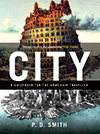
Today, for the first time in history more than half the population of the planet live in cities. Two hundred years ago, just three per cent were city dwellers, but by 2050, 75 per cent will be urbanites. City is the ultimate guidebook for our urban age, taking the reader on a journey through the past, present and future of the world's cities. Illustrated throughout and with essays on everything from Ellis Island and Eco-cities, to Street Food and Tahrir Square, this is a fascinating celebration of our greatest creation – the city. More
 Â
Â