“My precious…”
25 May 2007 | Da Vinci, Doomsday Men, Einstein, Godel, Hoeppe, Pesic, Reviewing, Science | Post a comment
I have to admit it: The Lord of The Rings was one of my favourite reads as a child. By the age of thirteen I’d ploughed through it three times in total. I can still remember the pure escapist bliss of reading it while lying in a hammock beneath the fruit trees in our Essex garden during the summer holidays (no school!), following the hobbits on every step of their travels through Middle Earth.
Gollum was one of my favourite characters. Admittedly, he was deceitful, murderous and had a serious personal hygiene problem. Hardly a positive role model. In fact that was probably why I liked him. There’s something about wickedness that is always more intriguing in fiction than goodness.

But it might also have had something to do with the fact that my dad did a very good impression of Gollum.
Smeagol’s precious, my precious…
My dad was great at reading stories aloud and it was this that got me hooked in the first place. He made me realise that there is a magical place you can go to when the world seems bleak. It’s called imagination.
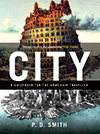
Yesterday I had my very own Gollum moment – the arrival of finished copies of my book. It’s deeply sad, but I have to admit that there was a very strong impulse in me to take a copy into a dark corner and whisper “my precious” to it softly.

I didn’t though. I resisted. But after working on a book for four years you get strangely possessive about it, and the moment when you can finally hold the fruit of your labours in your hands is special. Ask any writer and they’ll tell you the same.
Of course, as with any personally significant moment, there’s more than one emotion in the mix:
Relief that the work is complete. Satisfaction that, despite all the difficulties you’ve encountered on the way, you finally managed to get there in the end. Pride? Yes that is there too, although it goes without saying that no work is perfect and no one knows that better than the author. And of course there’s anxiety, because as you hold that book in your hands, you know that it is about to go out into the world. That means you’ve lost control over what has been up till now an intensely personal relationship between writer and text. In a sense, it is no longer just your book – the whole world (potentially!) gets to share the intellectual journey you’ve been on.
Maybe I’m reading a little too much into the moment. But obsessions – and writing a book has to rank as a major obsession – are like that. Just ask Gollum.
My precious…
Of course, I haven’t just been reading my own book! There are two others that have caught my reviewer’s eye: A World Without Time: The Forgotten Legacy of Gödel and Einstein, by Palle Yourgrau and Sky in a Bottle by Peter Pesic – both have just been published in paperback.
Towards the end of his life, Einstein claimed he went to his office “just to have the privilege of walking home with Kurt Gödel.” The two men could be seen strolling through the streets of Princeton where both worked at the Institute for Advanced Study. The wild-haired professor was often seen licking an ice-cream, which apparently scandalised the prim Princetonians.

Yourgrau tells how Gödel took Einstein’s theories to places even the great meister of relativity dared not go: he imagined a world without time. For example, Gödel calculated how a spaceship could travel into the past or the future. He “worked out the precise speed and fuel requirements, omitting only the lunch menu”.
Gödel’s favourite movie was Snow White. “Only fables present the world as it should be and as if it had meaning,” he said rather poignantly. Gödel eventually descended into paranoia and hypochondria (he died in 1978 weighing just 65 pounds). But Yourgrau’s witty portrait of this friendship between two of the most extraordinary minds of the twentieth century is very readable & I certainly recommend it.
Physicist and musician Peter Pesic concerns himself with a question which has perplexed philosophers, scientists and children alike since the beginning of history: why is the sky blue? His illuminating journey into the history of light and colour shows that attempts to answer this apparently simple question involve “the secrets of matter and light, the scope of the universe in space and time, the destiny of the earth, and deep human feelings.”

Leonardo da Vinci, Horace de Saussure, and John Tyndall all tried to capture the azure beauty of sky in a bottle. But as Pesic shows, it was poet and artist John Ruskin who first understood the mechanism that makes the sky blue. Ruskin was in the audience at Tyndall’s attempt to recreate the wondrous blue of sky in a bottle using photochemical reactions in 1869. Rather remarkably “the visionary artist saw more clearly than the sober scientist.” For although Tyndall clung on to the idea that particles in the air create blue sky, Ruskin grasped that air molecules themselves were responsible. This was confirmed by Einstein’s 1910 paper on opalescence, showing that the colour of the sky is caused by gas molecules scattering the sun’s light.
A fascinating book from a writer who, like me, is intrigued by the parallels between science and the arts. You can read my brief reviews of these two books for the Guardian, as well as a couple of other new releases, here and here.
Blue sky thinking is a hot subject in publishing at the moment. In the last day or so Götz Hoeppe’s Why the Sky Is Blue: Discovering the Color of Life has just landed on my desk from Princeton University Press. Ideal summer reading by the sound of it…
[originally posted on The Nervous Breakdown]