28 May 2012 | City, My Books
I’ve written a piece for Arc 1.2, the new digital quarterly from the makers of New Scientist, about cities and fun:
“Every year for three whole days in the picturesque Piedmont town of Ivrea, Italy, some three thousand people pelt each other mercilessly with oranges, until the streets are covered with eight inches of golden citrus gore and the gutters run with juice. Welcome to the Battle of the Oranges, part of Ivrea’s Carnival festivities. In this age of mushrooming megacities, Carnival is a boisterous reminder that urban life has proved so popular in the last five thousand years not just because of the economic benefits, but because cities are fun.”
Buy the issue — titled Post Human Conditions — and read the whole article, “Built for Pleasure”, here.
19 May 2012 | cities, Einstein, London, Reviewing

I’ve just reviewed two very different but fascinating books: The London Square: Gardens in the Midst of Town, by Todd Longstaffe-Gowan and Build Your Own Time Machine: The Real Science of Time Travel, by Brian Clegg. I’ve always thought London’s garden squares are one of the most beautiful features of the capital (especially Russell Square garden, above), so I was delighted to read Todd Longstaffe-Gowan’s beautifully illustrated book: “Squares are arguably London’s most significant contribution to the development of urban form (there are some 300 in Greater London). Inspired by the Italian piazza, they were introduced in the 17th century as a way of creating open spaces at the centre of London’s new residential neighbourhoods. But it was not until the following century that their gardens were enclosed and the gates locked against the ‘rudeness of the populace’.” Read the rest of the review at the Guardian. Brian Clegg’s study of time travel is an excellent survey of an endlessly fascinating subject. A delight for all epicures of duration. My review was in the TLS. Read it here.
15 May 2012 | cities, City, My Books
“Human history would be vastly different without cities. The move from village life, where one is surrounded by family and kin, to urban life among strangers – this has fundamentally shaped us as a species. Cities, as Lewis Mumford has said, are ‘the molds in which men’s lifetimes have cooled and congealed.’ Writing begins in cities, and cities are where the first libraries and museums are built. These dense centres of humanity have nurtured trade, science, religion, philosophy and theatre. The story of cities is also the story of human civilisation.”
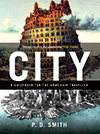
I’ve been interviewed about my new book City by Karl Whitney. Read the full interview at 3:AM Magazine.
14 May 2012 | cities, London
When I was reviewing a collection of Michael Moorcock’s non-fiction recently, I was struck by this passage from a piece he wrote about London in 1988, called ‘Building the New Jerusalem’:
‘Cities can be neither simplified nor easily defined. They are hard to interpret. They are the ultimate and natural expression of human evolution, of human dreams and needs; they are as complex as the people who build them, as the planet itself; they have a sensitive ecology. In their architecture and their social organisation they are capable of reflecting the very best in us.’
That’s a wonderful quote that neatly encapsulates what I was trying to achieve in my book City. On the future of London, he writes:
‘Instead of retreating from the notion of the megametropolis we should have embraced it, celebrated it, grown comfortable with it, equipped it with hospitals, crèches, schools, houses set among imaginatively laid-out parks and “wild gardens”, with low-rise asymmetrical buildings designed to blend with and reflect the organic world around them. We should acknowledge and revel in the natural complexity of the London we can create for ourselves.’
It’s an inspirational piece of writing about cities in general and London in particular. The collection — London Peculiar and Other Nonfiction — is well worth reading.
08 May 2012 | cities, City |
“The character of a city comes from its people. And that’s why the best cities are multicultural and cosmopolitan: there’s a unique atmosphere when people are constantly negotiating the differences between cultures and languages. I hope what this book shows is how positive that is, and how urbanism isn’t a new thing. It’s our natural mode of living.”
From my interview with Vision magazine about urbanism, Dubai and my new book, City: A Guidebook for the Urban Age.
Read more here.