Strange Horizons — Conversation with Darran Anderson
I’ve been talking to Darran Anderson, author of the remarkable Imaginary Cities, at Strange Horizons. It was great fun! Hope you enjoy it too.
Read the conversation here.
I’ve been talking to Darran Anderson, author of the remarkable Imaginary Cities, at Strange Horizons. It was great fun! Hope you enjoy it too.
Read the conversation here.
25 June 2016 | architecture, cities, Reviewing

I’ve just reviewed Geoff Manaugh’s new book, A Burglar’s Guide to the City, for the Guardian.
Here’s a passage from my review:
Burglary, Manaugh writes, is “topology pursued by other means: a new science of the city, proceeding by way of shortcuts, splices and wormholes”. Burglars don’t see the city we see. They see a city full of vulnerabilities to be used for breaking and entering. They see lift shafts that can be shimmied up, thermal cameras that can be disabled with hair spray, and doors that can be easily opened with lockpicks. They see plaster-board walls that can be cut through in an instant with the right tool: “like clouds, apartment walls are mostly air”. According to Manaugh, burglars understand the architecture of the city better than anyone. They are the “dark wizards of cities and buildings, unlimited by laws that hold the rest of us in”.
The book is full of wonderful anecdotes and insights, both into architecture and the city. If, like me, you’re a fan of Geoff’s website then you’ll love this book. It offers a delightfully playful and subversive view of the built environment, fizzing with ideas and new ways of looking at the spaces we inhabit. Read the review here and I hope you enjoy the book.
30 November 2015 | cities, London, Reviewing
Did you know that Herman Melville was the first to compare London’s fog to pea soup, in 1849? No, I didn’t either. I found this in Christine Corton’s brilliant new history of the Big Smoke — London Fog. It wasn’t just a problem in the nineteenth century either. In the eighteenth century Joseph Haydn, who was living in Great Pulteney Street, complained: “There was a fog so thick that one might have spread it on bread. In order to write I had to light a candle as early as 11 o’clock.”
But the fogs of the middle of the nineteenth century were especially thick, thicker even than Melville’s pea soup “of a gamboge colour”. Thomas Miller, a writer, said “it is something like being imbedded in a dilution of yellow peas-pudding, just thick enough to get through it without being wholly choked or completely suffocated. You can see through the yard of it which, at the next stride, you are doomed to swallow, and that is all.”
It’s thickness and overpowering smell of carbon and sulphur gave it the almost tangible density of food. HV Morton, in The Heart of London (1925), suggested that the city’s fog even had a local taste: “The fog has a flavour. Many flavours. At Marble Arch I meet a delicate after-taste like melon; at Ludgate Hill I taste coke.”
Bob Hope, the London-born comedian, continued the food theme, joking that Californian smog was “fog with the vitamins removed”. By the way, interestingly Corton notes that the word “smog” was never really used at the time to describe London’s fog and was only used in retrospect.
Anyway, I enjoyed Corton’s highly original study immensely. You can read my review of it on the Guardian’s site.
02 November 2015 | My Books, photography, Writers in Sussex | One comment
While writing my mother’s eulogy a few months ago, I realized that this year is the thirtieth anniversary of the publication of my father’s book, Writers in Sussex.
Sadly Bernard died at the end of 2005, but it was a wonderful experience working with him on the book, one I’ll always remember. I had just finished a photography course and he was looking for a project to occupy him during his early retirement. Together we hatched a plan for a book that would allow us to explore the beautiful county of Sussex. Once we had the green light from the publisher, we began travelling across the county, tracking down the homes of authors who had lived in Sussex.

While I photographed the houses, dad would talk to the owners, neighbours and anyone else who might have information about the local literary history. He often included their reminiscences in the book. And if our painstaking research also led us into a pub (in search of information, natch) then so much the better.
Later, when I came to write a book of my own, about the origins of atomic weapons, it was strange to recall the impressive stately home, Uppark, where HG Wells’ mother was house-keeper and where her son was allowed to indulge his passion for reading in the great library. Imagine Wells, the fantastist of the future, living here!

At Burpham, a secluded and ancient village within sight of Arundel castle, we found no less than three houses that had once belonged to authors – the homes of Mervyn Peake, John Cowper Powys and the bee-keeper and popular author Tickner Edwardes. I’ve always loved Peake’s wonderfully strange writing and illustrations. The views near Burpham across the river to Arundel Castle are immensely evocative of Gormenghast and its bizarre inhabitants. It’s a magical part of the world. Peake is buried in Burpham churchyard and a line from one of his poems is on his grave: “To live at all is miracle enough.”

Recently, I was delighted to see that Blake’s Cottage had been bought by the Blake Society and will soon be open to the public. That would have pleased my dad, as he often took his adult education students to see the old flint cottage in Felpham – “the sweetest spot on earth”, according to Blake.

Sadly some of the houses we photographed have now been demolished. Asham House, Beddingham, where Virginia Woolf lived during the First World War, has gone. That’s a great shame as it was a beautiful house. When we visited, the air was filled with the sound of ragged crows calling to each other across the bare tree tops.

The brick church of St Cuthbert’s in Hove, where the poet Andrew Young was a minister from 1920, was demolished while we were working on the book. I took a photograph of Bernard among the ruins. As a young man, my dad had been a poet and he loved Young’s poetry.

They were good days, full of conversations about writers and walks across rolling downland, fueled by dark Sussex ales – days I’ll never forget. Thanks dad.
I dare say you can still pick up a second-hand copy of our book. My photos from the book (and a few extra ones) are mostly on Flickr. You can also read the foreword, written by another Sussex writer, Christopher Fry. I’ve uploaded a pdf file of his original text, typed on his 1917 typewriter, here.
If you’ve enjoyed reading this, you might be interested in another piece I wrote on the links between place and writing.

28 October 2015 | Paris, photography
Just back home after a much-needed break in Paris. The city of light was more beautiful than ever in the autumn sun…

If you get the chance, go to Victor Hugo’s apartment on the Place des Vosges. Fascinating in itself, but worth it just for the views of the exquisite seventeenth-century square outside…
More photos over on Flickr, as ever.
À bientôt…

I’m the author of four books. The most recent is City: A Guidebook for the Urban Age. Before that I wrote a cultural history of science and superweapons called Doomsday Men, a biography of Einstein, and a study of science and literature. More
Also: guardian.co.uk
Contact me | Subscribe to the RSS feed
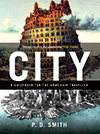
Today, for the first time in history more than half the population of the planet live in cities. Two hundred years ago, just three per cent were city dwellers, but by 2050, 75 per cent will be urbanites. City is the ultimate guidebook for our urban age, taking the reader on a journey through the past, present and future of the world's cities. Illustrated throughout and with essays on everything from Ellis Island and Eco-cities, to Street Food and Tahrir Square, this is a fascinating celebration of our greatest creation – the city. More